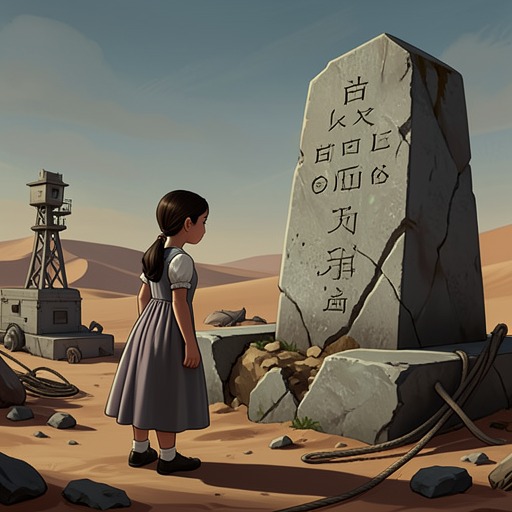
Discovery of Amenemhab’s Tomb
Theodosia and the Serpents of ChaosDiscovery of Amenemhab’s Tomb is the breakthrough that turns a long archaeological search into the crisis at the center of the story. After two years without success, Henrietta Throckmorton finds the tomb adjoining that of Thutmose III, and brings its most consequential object, the Heart of Egypt, to the Museum of Legends and Antiquities. The discovery vindicates the Throckmortons’ work, but the artifact’s curse makes the achievement dangerous: Theodosia senses its malign power before she knows what it is, and later illness and crop failure give that warning a national scale.
Earlier Research and a Stolen Discovery
The find takes place against the history of Alistair Throckmorton’s earlier work on Thutmose III. After years of painstaking research, he identified the likely location of the pharaoh’s tomb. When Theodosia was two, he and Henrietta travelled to the Valley of the Kings, leaving their daughter with her British grandmother. Their expedition succeeded, but a colleague betrayed them, and Victor Loretti claimed the official discovery. The British Museum, where Alistair then worked, refused to support him and accepted Loretti’s claim. Alistair left the institution and joined the Museum of Legends and Antiquities.
That earlier episode gives the new discovery more weight than a simple excavation success. Alistair has again devoted himself to locating a royal-era tomb, this time that of Amenemhab, Thutmose III’s Minister of War. Some people attributed the pharaoh’s military conquests to Amenemhab’s brilliance. Alistair’s theory concerns the tomb’s location, but after two years of searching without results, it is Henrietta who finds the adjoining burial place. The family’s excitement at the new evidence therefore carries the memory of a previous achievement denied official recognition, even as the account makes clear that Henrietta herself has made this discovery.
The Find Returns to the Museum
The arrival of Henrietta and the artifacts at the museum turns the discovery into a family scene. After the trunks are unloaded, she takes a key from her pocketbook and kneels before the first trunk. Alistair crowds close to see what she has brought back, visibly eager. He has praised her research, and Theodosia watches his face for any sign of bitterness. None is apparent. The moment quietly contrasts his earlier professional betrayal with the welcome given to Henrietta’s successful return.
The family first examines a range of objects, including stelae, spears, and daggers. Clive Fagenbush arrives, and Henrietta responds by producing a further artifact from her handbag. Before it is revealed, Theodosia shivers violently; the sensation is not ordinary cold but the bodily warning she experiences when something is cursed. The others are watching Henrietta unwrap the package and do not notice her reaction. That separation between public excitement and Theodosia’s private alarm makes the discovery double-edged: the object is a spectacular archaeological prize to the assembled adults, but to her it is already a source of danger.
The revealed object is a large scarab carved from precious stone. Gold wings curve from its sides and are inlaid with thousands of jewels; a cherry-sized carnelian marks its head, while a smaller green stone decorates the beetle’s underside. Henrietta identifies it as the Heart of Egypt and says it came directly from Amenemhab’s tomb. The disclosure links the tomb, the artifact, and the danger Theodosia has sensed. What the room receives as the climax of Henrietta’s discovery is also the moment the cursed object enters the museum’s world.
From Archaeological Triumph to Public Threat
The consequences unfold through reports of harm beyond the museum. At breakfast, Theodosia sees a newspaper headline announcing crop blight in the northern counties and an expected record shortfall. The language of famine recalls the warning Lord Wigmere had given her about plague, pestilence, and famine. Soon another small newspaper item reports a virulent illness striking dozens in Hampsford. These reports do not constitute proof that the artifact has caused each disaster, but the story places them alongside Theodosia’s knowledge of the curse and makes the danger increasingly difficult to dismiss as confined to the tomb or museum.
The threat becomes personal when another newspaper headline reports that hundreds have been hospitalized with virulent influenza. Later, a telegram brings news that Henry has caught the illness. Henrietta reads over Alistair’s shoulder, gasps, and collapses into his support; he reassures her that their son is strong and will recover. Theodosia understands the illness through the curse’s growing pattern and fears that it is uncomfortably close to the plague she has been warned about. Her mother’s distress also sharpens the immediate stakes: Henrietta wants to go home, while Theodosia knows the Heart of Egypt has not yet been returned to its tomb.
The Discovery’s Reversal
The discovery thus changes meaning as the story proceeds. At first, the adjoining tomb and its contents fulfil years of archaeological effort, and the jewel-encrusted scarab offers Henrietta a triumphant object to unveil. But the artifact’s removal from its resting place gives Theodosia an urgent task. With Henry ill and the family preparing to return, she fears that there is no time to spare: the Heart of Egypt must be taken back to the tomb. The expedition’s success becomes a source of peril precisely because its most remarkable find has been carried away. The event establishes the story’s central reversal, in which recovering and exhibiting the past cannot be separated from responsibility for what its removal releases.